
When life feels busy or uncertain, setting aside time for spiritual reflection can help you reconnect with what matters to you. Chakra practices offer one way to explore themes such as stability, creativity, confidence, love, and self-expression.
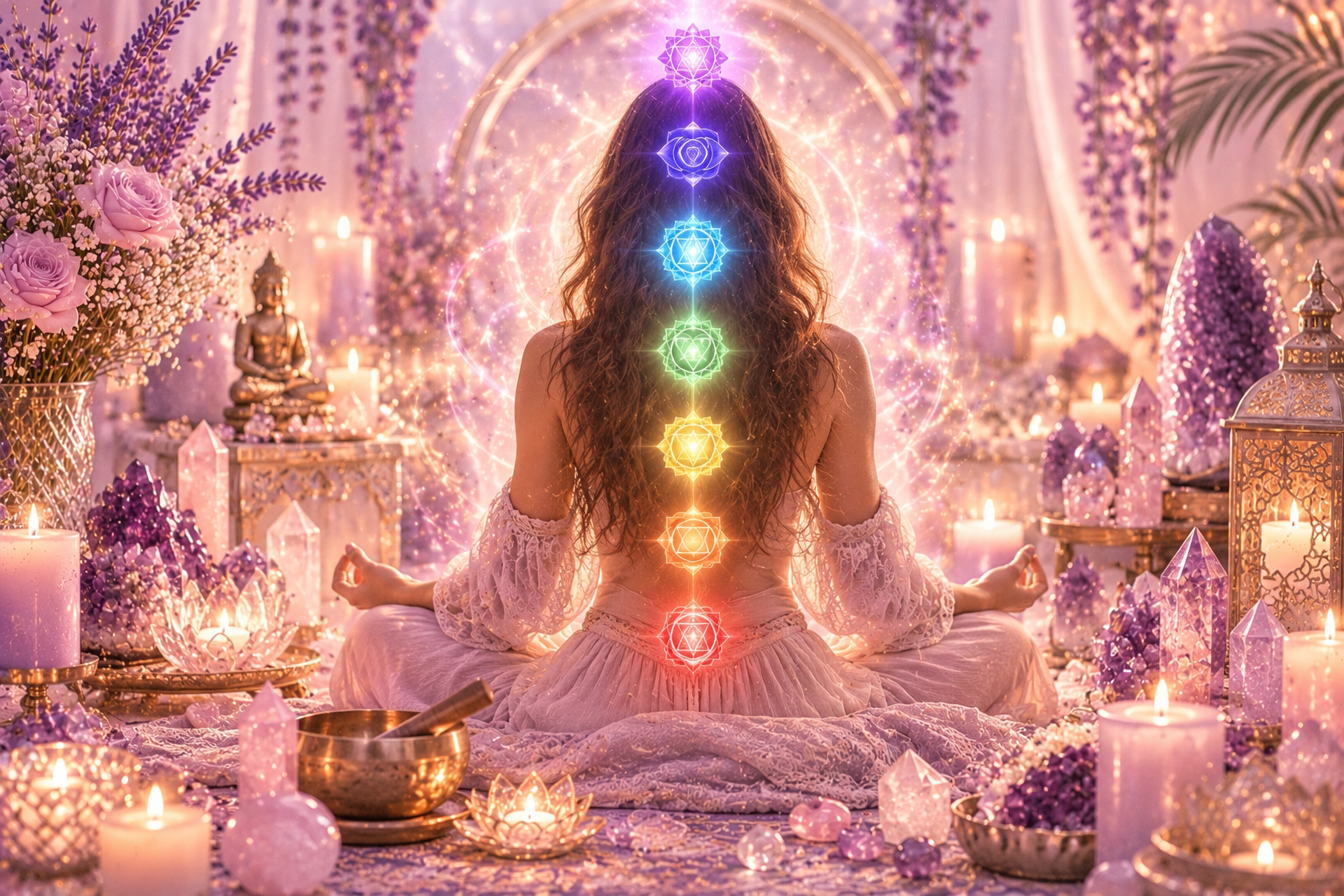
The word chakra comes from Sanskrit and is commonly translated as “wheel.” Chakras are described as subtle energy centers in certain spiritual traditions rooted in South Asia. Different traditions describe them differently; the familiar seven-chakra framework is widely used in contemporary spiritual wellness practices.
At Psychic Parlor in Charleston, chakra balancing provides an opportunity to explore this spiritual framework through a personalized experience. Understanding the seven chakras can be a helpful starting point.
1. The Root Chakra: Grounding and Security
The root chakra, known as Muladhara, is traditionally located at the base of the spine. In the modern seven-chakra framework, it is commonly associated with the color red.
Its spiritual themes include stability, belonging, and a sense of connection to the physical world. Root chakra reflection invites you to consider what helps you feel grounded, especially during periods of uncertainty or change.
You might ask yourself:
What gives me a sense of stability?
Where do I feel most supported?
What everyday routines help me feel present?
Walking outdoors, practicing mindful breathing, or creating a comfortable space for quiet reflection can complement a grounding spiritual practice.
2. The Sacral Chakra: Creativity and Emotional Expression
The sacral chakra, called Svadhisthana, is traditionally associated with the lower abdomen. Its commonly recognized color is orange.
This chakra represents themes of creativity, pleasure, emotional expression, and connection. It offers a way to reflect on how freely you express yourself and whether you make room for experiences you enjoy.
Sacral chakra reflection might involve asking what inspires you, how you respond to your feelings, and where you would like more creativity in your life.
Painting, dancing, journaling, or trying a new creative activity can provide space to explore these themes without focusing on a particular result.
3. The Solar Plexus Chakra: Confidence and Personal Choice
The solar plexus chakra, known as Manipura, is associated with the upper abdomen and the color yellow.
Its spiritual meanings center on confidence, motivation, personal responsibility, and the ability to make choices that reflect your values.
Working with this chakra can become an opportunity to consider where you feel capable and where you tend to doubt yourself. It may also encourage reflection on boundaries and the difference between making a thoughtful compromise and ignoring your own needs.
A useful question is: “What is one decision I can make today that respects what matters to me?”
4. The Heart Chakra: Love and Compassion
The heart chakra, called Anahata, is traditionally located at the center of the chest. Green is its most common color association in the modern framework, while pink is also used in some contemporary practices.
The heart chakra represents love, compassion, connection, and openness. These themes extend beyond romantic relationships to include friendship, family, community, and the way you treat yourself.
Heart chakra reflection can be meaningful after a relationship change or during a period of personal growth. You might explore how you give and receive care, what healthy connection means to you, and where you need stronger boundaries.
Compassion does not require returning to a relationship or overlooking hurtful behavior. It can include recognizing your feelings while choosing what supports your well-being.
5. The Throat Chakra: Communication and Authentic Expression
The throat chakra, known as Vishuddha, is associated with the throat and the color blue.
Its spiritual themes include honest communication, listening, and expressing yourself in ways that align with your values.
Reflecting on this chakra may bring your attention to conversations you have been avoiding, needs you struggle to express, or situations where you find it difficult to feel heard.
Journaling before an important conversation, practicing a clear request, or making time to listen without interrupting can help you explore these themes in everyday life.
6. The Third Eye Chakra: Intuition and Perspective
The third eye chakra, called Ajna, is traditionally associated with the area between the eyebrows. Its commonly recognized color is indigo.
This chakra represents intuition, awareness, imagination, and insight. In spiritual practice, it is often connected with looking inward and considering a situation from a broader perspective.
Third eye reflection can involve noticing your assumptions, exploring recurring thoughts, or making space for quiet contemplation.
Intuition can be part of personal reflection, alongside observable facts and careful judgment. A strong feeling may deserve attention without necessarily being a prediction or proof of something outside yourself.
7. The Crown Chakra: Spiritual Connection and Meaning
The crown chakra, known as Sahasrara, is associated with the top of the head. Violet and white are common color associations.
Its spiritual themes include meaning, awareness, and connection to something larger than the individual self. Depending on your beliefs, that connection might involve faith, nature, community, or a sense of shared humanity.
You don’t need to follow a particular religion to reflect on these questions. Meditation, prayer, gratitude, or quiet time in nature may offer meaningful ways to explore your own understanding of spiritual connection.
What Does Chakra Balancing Mean?
Chakra balancing is a spiritual practice intended to encourage a sense of harmony among these energy centers. Depending on the practitioner, a session may incorporate meditation, visualization, sound, crystals, or other energy-focused practices.
Chakras belong to a spiritual framework rather than an established anatomical system. Feeling tired, sad, or uncertain does not prove that a chakra is blocked. You can use chakra symbolism as a tool for reflection without treating it as a diagnosis.
There is also no need to approach the practice as a test you must pass. You might simply choose one theme—such as grounding, communication, or compassion—and spend time considering its place in your life.
Exploring Chakra Balancing at Psychic Parlor
Learning about the seven chakras can open up thoughtful questions about how you relate to yourself, others, and your spiritual beliefs. Each chakra offers a different theme to explore, from finding stability to expressing your needs and discovering a sense of purpose.
At Psychic Parlor in Charleston, Psychic Lori offers chakra balancing alongside psychic readings and other spiritual services. Whether you are new to chakra practices or interested in deepening your personal exploration, you can ask about the session process and what to expect.
Visit Psychic Parlor at 213 Meeting St., Charleston, SC 29401, or call (843) 323-8620 to learn more or inquire about an appointment.
